

Medical carts, laboratory stations, and specialized equipment often rely on metric threaded stem casters such as M10x1.5. When a caster wears out or the brake fails, replacing it correctly is essential for equipment stability, safety, and smooth mobility.
This technical guide explains how to confirm your M10 thread specification, remove the old caster, install a replacement safely, and select the right 3-inch M10 stem caster for healthcare and equipment applications.
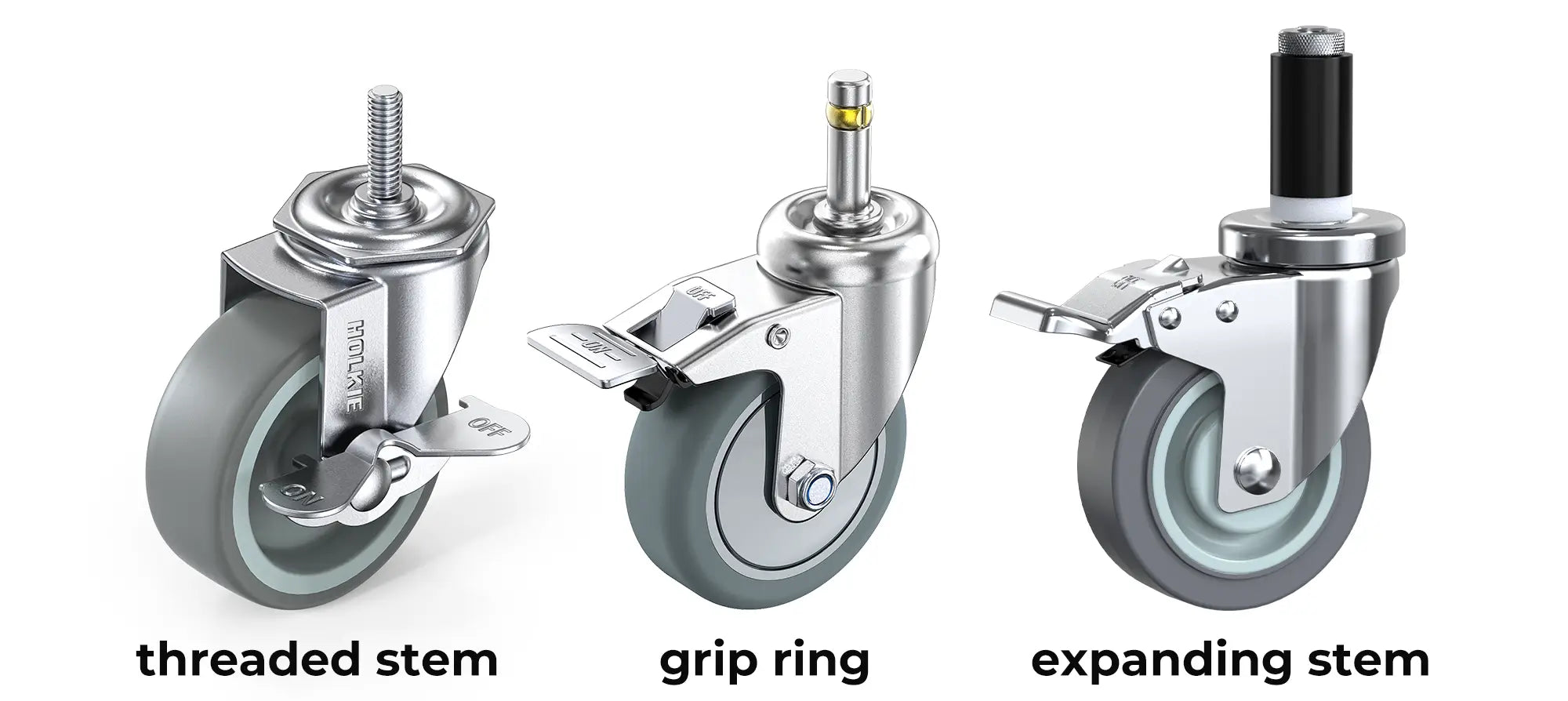
Unlike many U.S. industrial carts that use imperial sizes (3/8" or 1/2"), medical and laboratory equipment frequently use metric threads. M10x1.5 threaded stems are common in:
Metric stem casters provide precise fitment for equipment designed with international engineering standards. Selecting the correct replacement ensures safe equipment operation and reduces mobility-related downtime.
M10 refers to a 10mm diameter metric thread. The 1.5 indicates the thread pitch (distance between threads in millimeters). A common stem length for equipment applications is 30mm.
To confirm compatibility:
Important: M8 and M10 are not interchangeable. Installing the wrong size may damage internal threads or compromise equipment stability.
In healthcare environments, unstable mobility can create safety risks. Timely replacement supports workplace safety and floor protection while maintaining operational efficiency.

Ensure the equipment is unloaded and stabilized. Engage remaining brakes before removing the damaged caster.
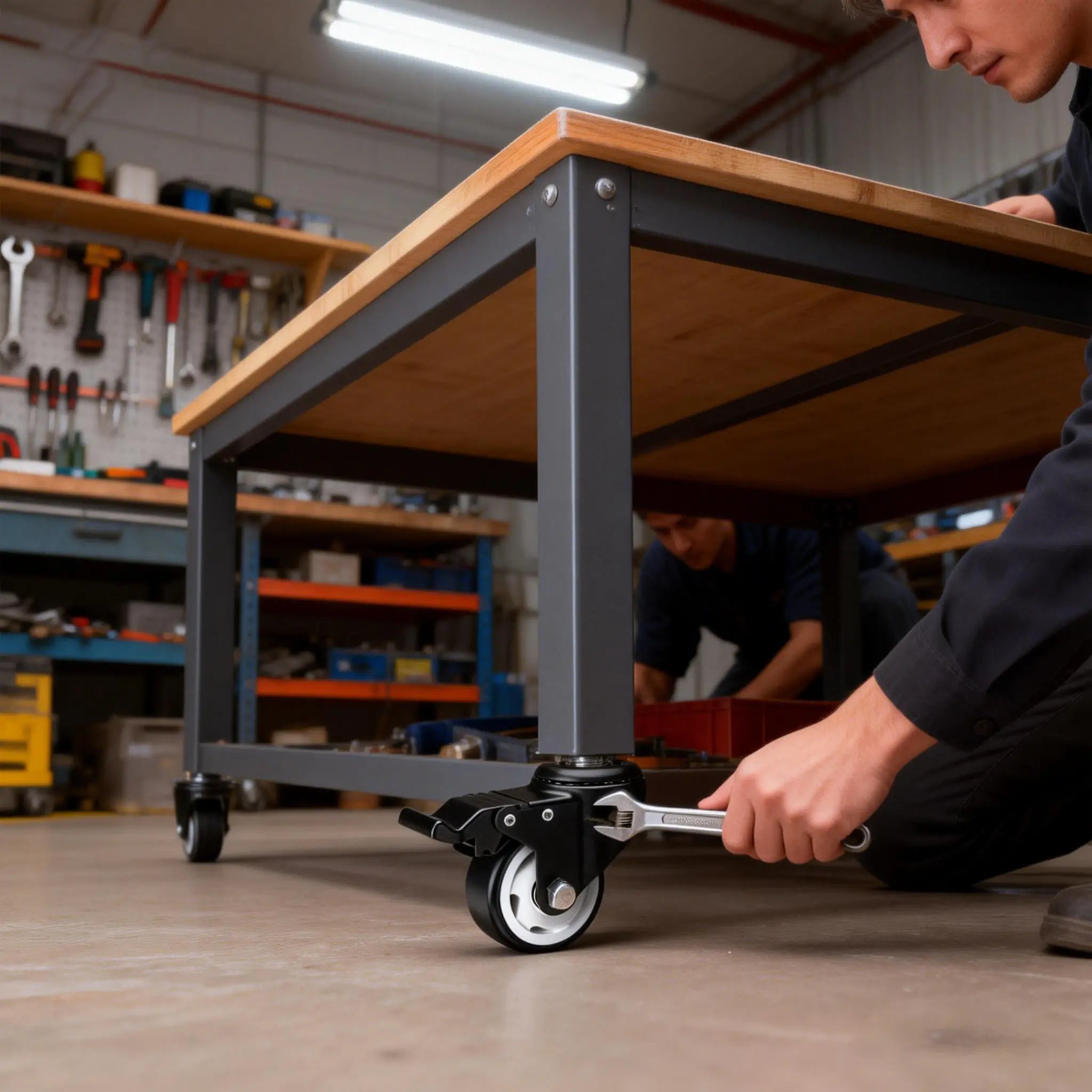
Using a wrench, rotate the threaded stem counterclockwise until it disengages from the socket. Avoid excessive force that could strip internal threads.
Check the internal socket for debris or damage. Clean thoroughly before installing the new caster.
Align the new M10x1.5 threaded stem and hand-tighten clockwise. Once aligned properly, use a wrench to secure snugly without overtightening.
Engage the side brake and test rolling stability. Ensure smooth swivel motion and secure locking performance.
Choosing the correct replacement involves more than matching thread size. Consider application environment, floor type, and usage frequency.
A non-marking wheel helps protect sensitive flooring in healthcare and lab settings.
3" M10 Stem Caster with Side Brake – Gray Version
In office-integrated medical or technical environments, appearance may also matter.
3" M10 Stem Caster with Side Brake – Black Version
Proper caster maintenance directly affects industrial safety and workplace ergonomics. Equipment instability can lead to operator strain or accidental movement during procedures.
Routine inspection of threaded stems and brake systems ensures consistent mobility and secure positioning during operation.
One of the most common replacement mistakes is ordering an imperial stem when metric threading is required. A 3/8" stem is not equivalent to M10.
Always confirm thread diameter in millimeters before placing a replacement order.
Proactive caster maintenance extends equipment lifespan and reduces unexpected downtime.
Metric stem casters are less common in the U.S. market. Ensuring consistent availability is critical for medical and equipment manufacturers who require repeat purchases.
When selecting a supplier, verify:
If your current caster shows signs of wear, replacing it with a properly specified M10 stem caster restores adjustable mobility and safe equipment operation.
Shop Gray M10 Replacement
Shop Black M10 Replacement
Need help finding the right replacement caster?
Explore our complete collection of stem casters.
Yes, M10x1.5 is widely used in imported medical and laboratory equipment requiring metric threaded stems.
No. Metric and imperial threads are not interchangeable and may damage equipment.
3-inch casters are common for medical carts, providing a balance between stability and maneuverability.
The side brake locks the wheel rotation. For total lock (wheel and swivel), a different brake design is required.






Office Chair Ball Caster Replacement — Smooth, Floor-Safe Mobility
Scaffold Casters: How to Choose the Right Wheels for Mobile Scaffolding