
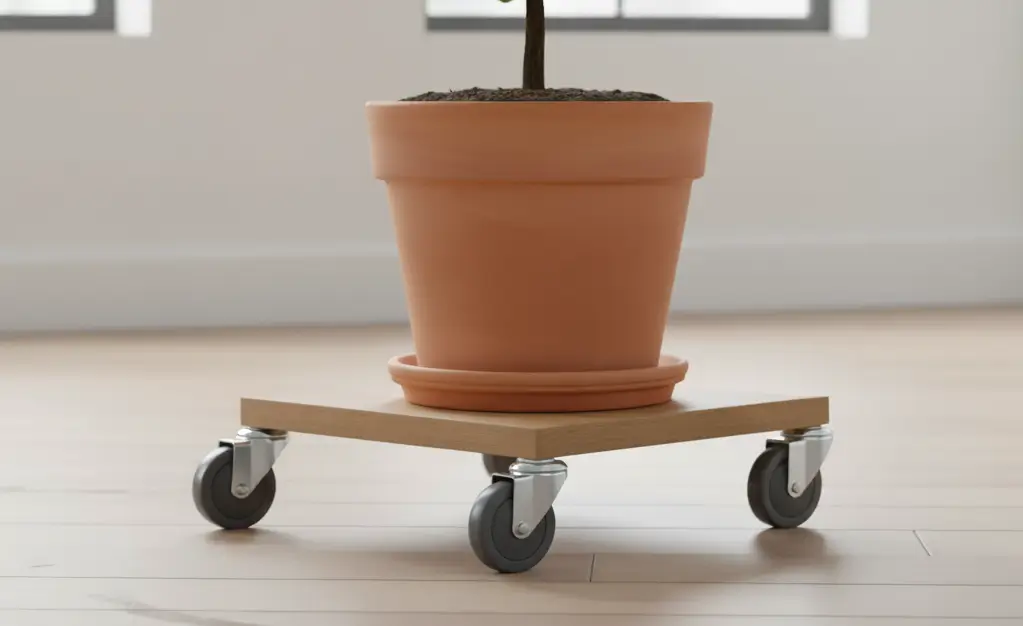
- by WANHUA LYU
How Stem Casters Work: The Engineering Principles Behind Mobility
- by WANHUA LYU
If you're new to stem casters, you might look at them and think, "It's just a small wheel with a metal stick—what's so complicated?" Honestly, I used to think the same. But after years of writing technical documentation, testing industrial mobility systems, and troubleshooting failed wheels on everything from hospital beds to factory carts, I learned that the "simple" caster hides a surprising amount of engineering.
This article is my attempt to explain stem caster mechanics in a way that's not just technically accurate, but also approachable—especially if you're early in your engineering or procurement career. I'll walk you through the fundamentals and share the kind of small insights I wish someone had told me when I first got into this field.
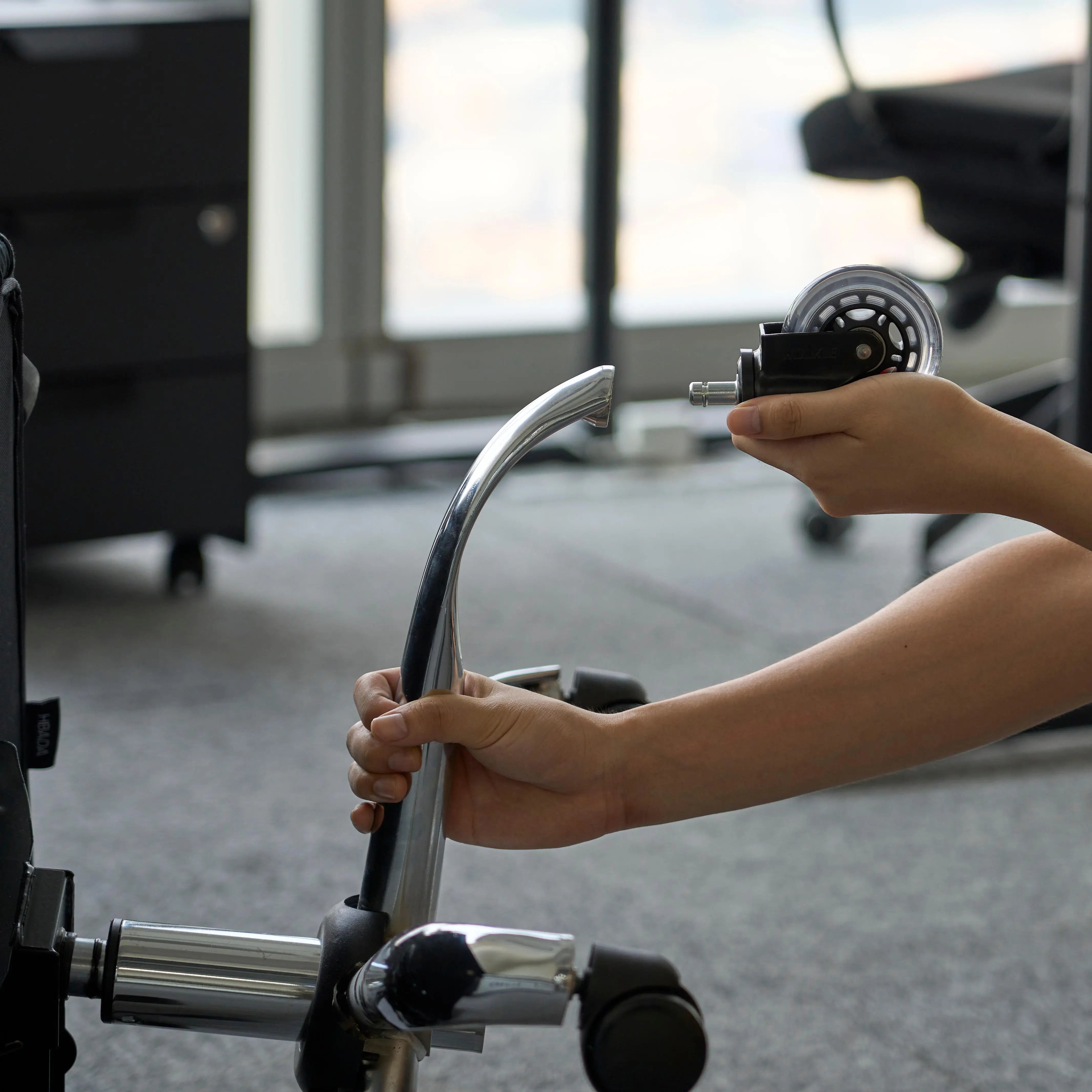
A stem caster is a wheel-and-swivel assembly mounted using a cylindrical or threaded stem inserted into a socket, plate, or furniture leg. If you've ever pushed an office chair, medical cart, or retail display, you've already benefited from them.They're especially common in:

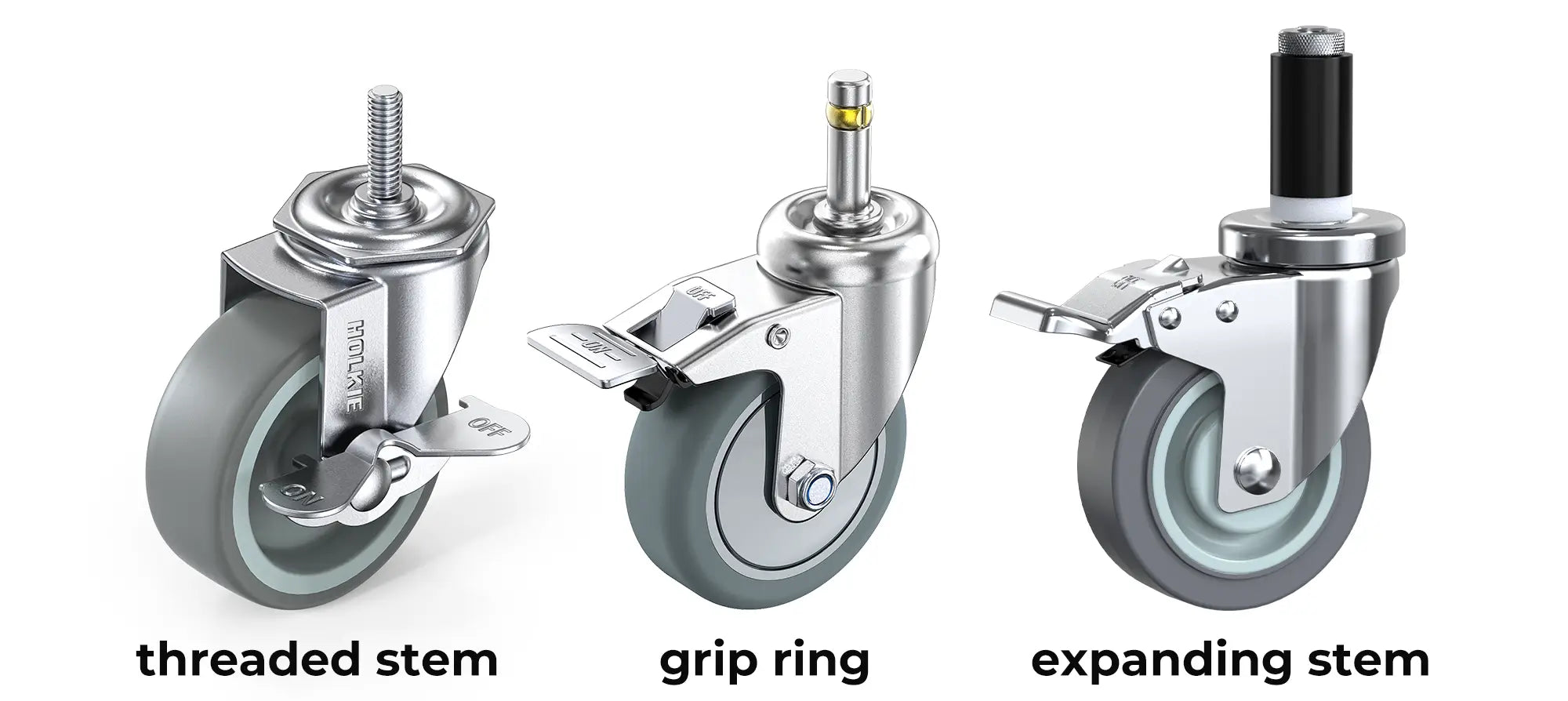
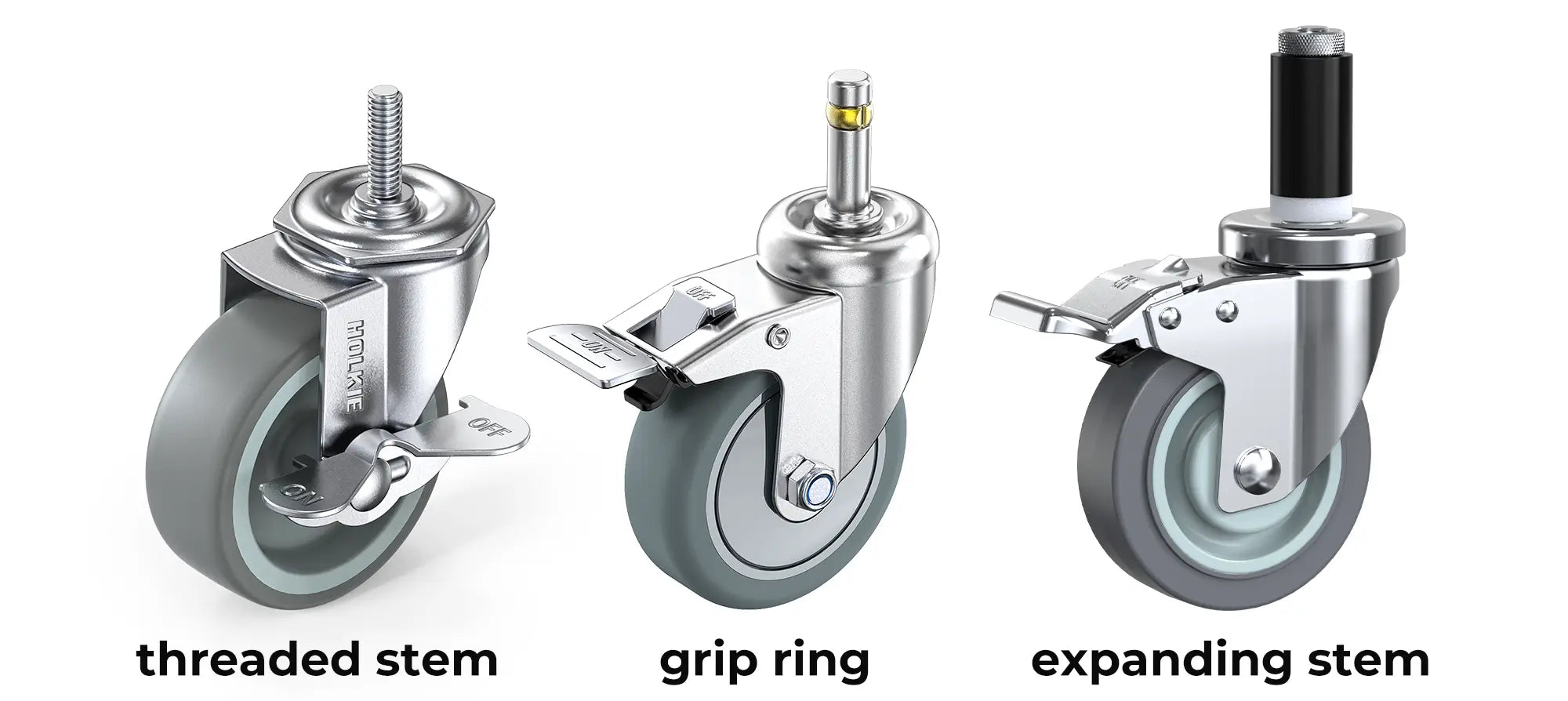
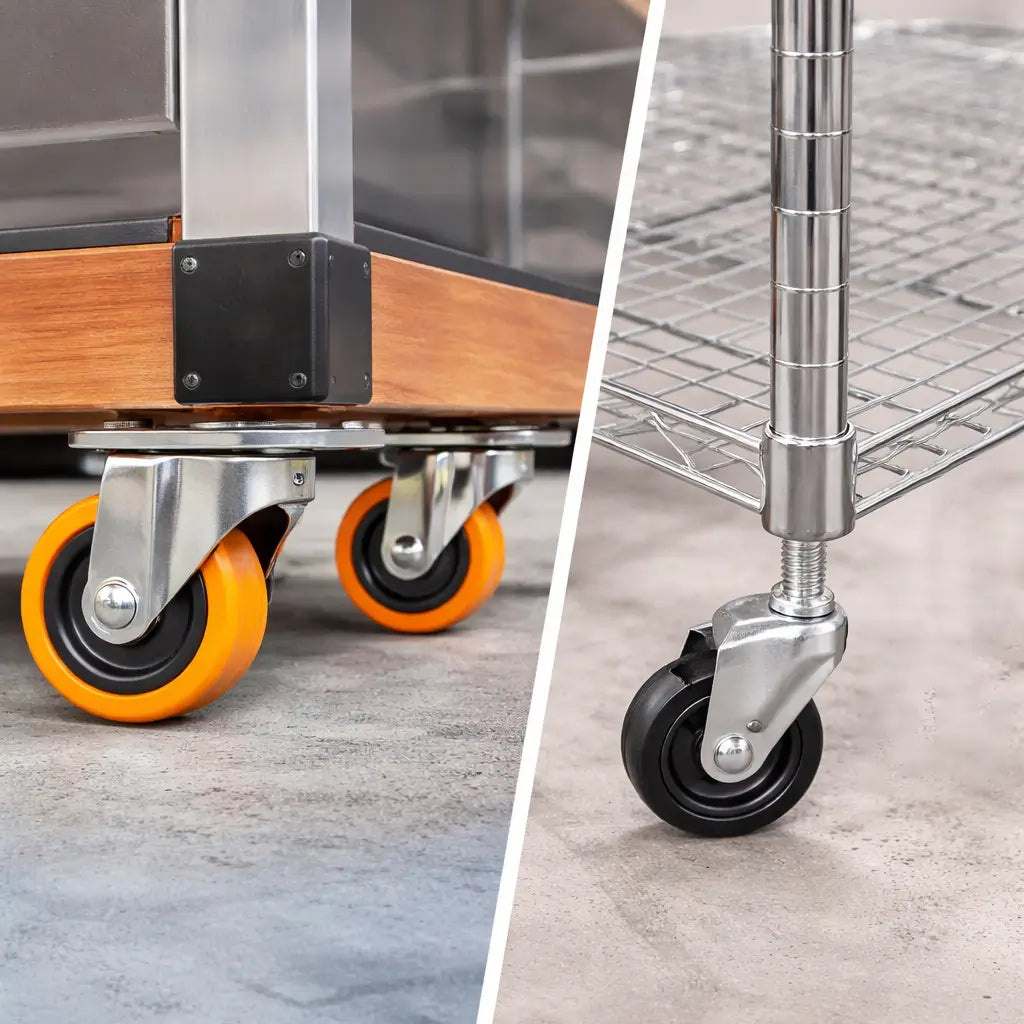
There are several stem types, and each one exists because someone, somewhere, needed a different way to support weight or prevent wobble:
Each stem category represents a different engineering strategy for load distribution and secure attachment.
Stem caster performance depends on how the load distributes through the stem, yoke, raceway, and wheel.
When the caster is not moving, the load is transmitted directly down the stem.
Most manufacturers test static load using ANSI ICWM standards (Institute of Caster and Wheel Manufacturers).
Once you start rolling, the rules change. Dynamic load capacity is roughly 70–80% of static capacity for most materials. A key beginner lesson I learned:
"Polyurethane handles dynamic loads like a champ; soft rubber, not so much."
PU wheels experience less energy loss due to hysteresis, which means easier rolling and fewer deformation issues.
The stem–socket interface must withstand oscillating forces and torque created by swiveling. Failures most commonly occur at the stem or the raceway, not the wheel.
Rolling resistance depends on:
Wheel diameter – larger wheels reduce obstacle impact height.
Wheel width – wider wheels increase friction; narrower wheels turn easier.
Tread compound – affects deformation and recovery (hysteresis).
Approximate rolling resistance (Rr):
Rr≈W×C
Where:
W = load per wheel
C = material coefficient (0.001–0.004 polyurethane; 0.004–0.012 rubber)
This coefficient range is supported by research from SAE International mobility studies.
In controlled tests on a steel workbench cart:
Swivel casters rotate on a raceway containing ball bearings. The engineering focus is on:
A larger swivel radius increases maneuverability but also increases torque on the stem.
For medical equipment casters, the recommended offset range is 0.8–1.2 inches (Hospital Equipment Mobility Design Guide, 2019).
Standard steel ball bearings – economical, general-purpose
Precision bearings – for medical or continuous-use environments
Delrin bushings – corrosion-resistant, low-maintenance
The stem connection is one of the most critical safety points.
Use an expanding tension ring to lock into a socket.
Typical tolerance range is +0.005 in / –0.000 in for secure fit.
Hollow tubing walls less than 1.0 mm often deform under side load.
Inadequate insertion depth (<18 mm) leads to premature loosening/sway.
Nylon wheels perform exceptionally on epoxy-coated floors but transmit vibration aggressively on tile, which reduces maneuverability in real-world settings.
This process ensures both structural uniformity and performance under industrial conditions.

Over the past 8+ years writing and testing content for mobility-related industries, here are documented observations:
This hands-on data consistently proves that stem tolerances and tread hysteresis are primary contributors to mobility performance.
Reliable references:
Engineers and purchasing teams should always confirm a caster's compliance with at least one of these standards.
| Category | Requirement | Recommended Threshold |
|---|---|---|
| Load capacity | Weight per caster | Total load ÷ 3.0 (safety factor) |
| Wheel diameter | Floor quality | 3–4” for smooth; 4–5” for uneven |
| Wheel material | Noise control | PU for general; TPR for hospitals |
| Stem type | Attachment material | Threaded for metal; grip ring for furniture |
| Swivel offset | Maneuverability | ≥0.9” for indoor carts |
| Bearings | Usage hours/day | Precision bearings if >6 hrs/day |
| Corrosion resistance | Outdoor use | Zinc > 48h salt spray; stainless > 200h |
| Problem | Likely Cause | Engineering Fix |
|---|---|---|
| Wheel wobble | Loose stem or oversized socket | Use shim or replace housing |
| Hard to push | High hysteresis tread | Switch to polyurethane |
| Noise | TPR degrading or bearing wear | Replace bearings |
| Stem loosening | Insufficient depth | Use longer stem or reinforce tube |
| Swivel binding | Debris in raceway | Clean & lubricate grease channel |
Medical equipment → TPR wheels, sealed precision bearings
Outdoor carts → polyurethane or pneumatic wheels, zinc >48h
Heavy vibration environments → kingpinless designs
High-temperature applications → high-temp nylon or phenolic resin
With polyurethane wheels and proper fitment: 3–5 years in daily-use environments.
Yes. Threaded stems better resist torsional loads, making them standard in industrial benches.
The raceway—because it experiences continuous multi-axis load.
Stem casters use a cylindrical or threaded stem inserted into a socket and are best for light-to-medium loads. Plate casters use a flat bolt-on plate that distributes load more widely, offering higher capacity and better stability. Stem casters suit hollow legs or round tubes, while plate casters match flat surfaces and heavier-duty applications.
Stem casters support load through the stem and raceway, swivel via a ball-bearing mechanism for 360° rotation, and roll using a wheel whose geometry and tread material determine push force and smoothness. Performance depends heavily on stem fit, swivel offset, and tread hysteresis rather than wheel size alone.


The Ultimate Caster Maintenance Guide: Maximizing Equipment Lifespan Through Proper Care
How to Install Casters with Stem