
- by WANHUA LYU
Christmas Tree Decorations Ideas for Small Apartments (Space-Saving & Mobile Setup)
- by WANHUA LYU
Decorating a Christmas tree in a small apartment is a balancing act between festive atmosphere and everyday functionality. Unlike large homes, apartments demand thoughtful choices—every square foot matters, every visual layer counts, and every decoration decision affects how the space actually feels to live in. Small spaces can easily feel cluttered if the tree or decorations are oversized, but with careful planning, even a tiny apartment can feel magical during the holiday season.
This guide is designed for renters, studio dwellers, and anyone working with limited floor space who still wants a beautiful, intentional Christmas tree setup—without crowding walkways, overwhelming the room, or creating post-holiday storage chaos. We’ll cover tree selection, decoration strategies, mobility solutions, safety tips, and storage hacks so that your festive setup is as functional as it is beautiful.
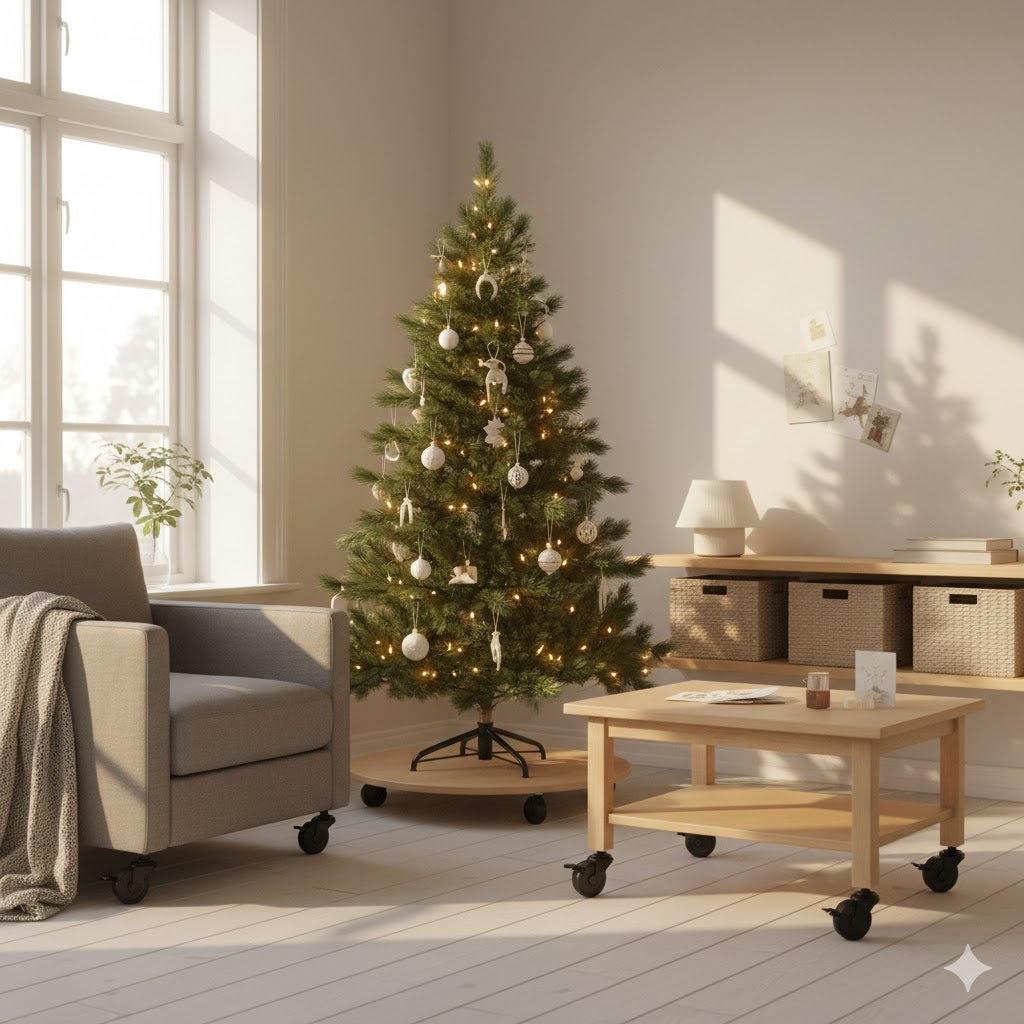
In small apartments, the Christmas tree often competes with core living functions: seating, dining, storage, and daily movement. A full, wide tree may look stunning in photos—but in real life, it can shrink the room instantly. Choosing the right tree height, profile, and decoration density is essential to preserve both visual impact and functional space. For example, a 5-foot slim tree in a corner can look larger than it is due to careful vertical ornament placement and lighting.
Unlike larger homes, most apartments combine multiple functions into one space: living room, dining area, entryway, and sometimes even a workspace. A poorly placed tree can interrupt natural walking paths and make the room feel constantly “in the way.” Think about where people naturally move throughout the day, where furniture is used, and how visitors will navigate your space. Even a small adjustment, like moving the tree slightly off-center or against a wall, can dramatically improve flow.
Decorations don’t only take up space when displayed—they demand storage year-round. Without a garage, basement, or attic, storage strategy becomes just as important as decoration style. Under-bed bins, vertical racks, and stackable boxes allow you to organize ornaments efficiently. Labeling each container also reduces the time it takes to set up next season, ensuring your holiday preparation is smooth and stress-free.
Slim and pencil-style trees are specifically designed for tight spaces. They preserve vertical presence without eating up floor area—ideal for corners, beside windows, or between furniture pieces. While full-bodied trees are visually impressive, slim trees paired with reflective ornaments and proper lighting can create the illusion of fullness without overcrowding.
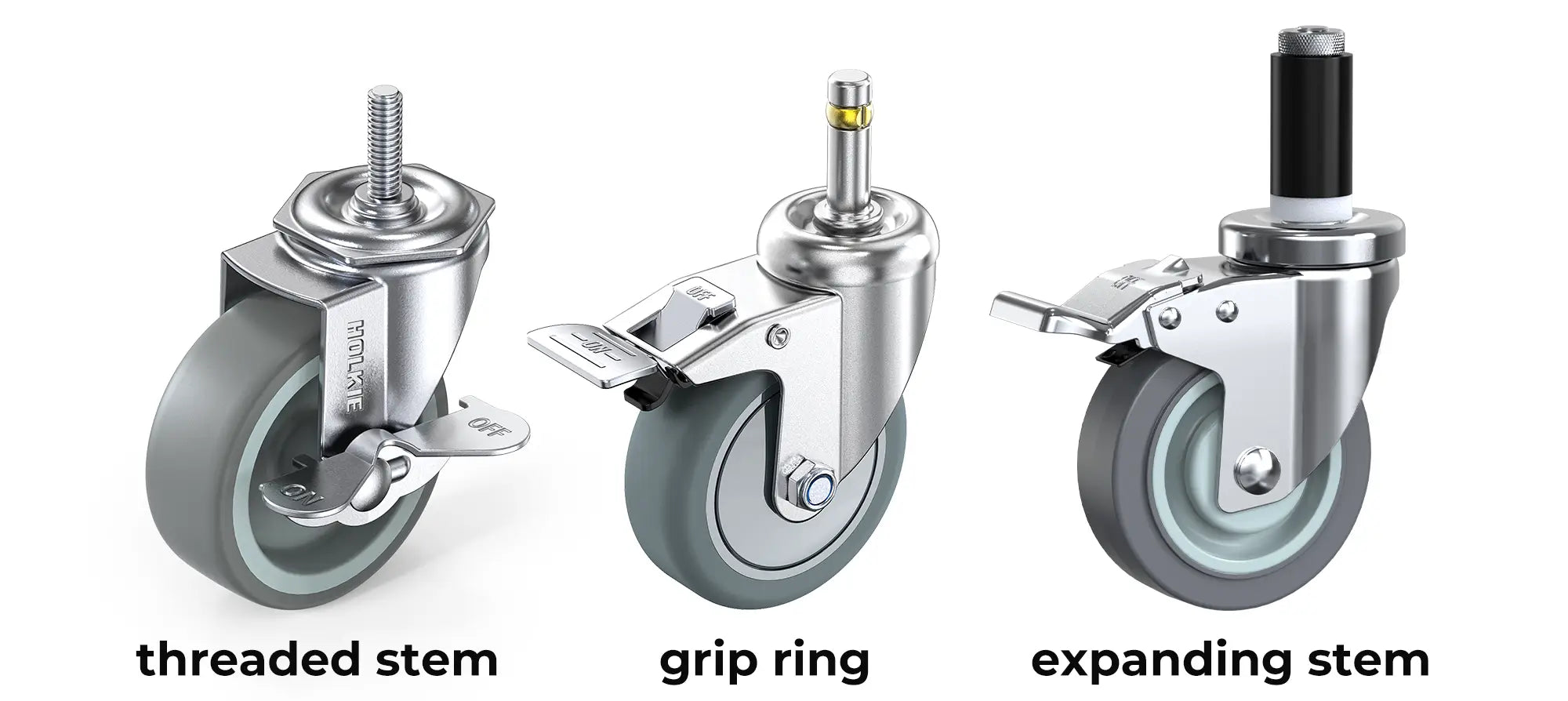
For studios and micro-apartments, tabletop trees offer seasonal charm without any floor footprint. Placed on consoles, rolling carts, or shelves, they create a festive focus without spatial sacrifice. For extra convenience, consider mounting your tabletop tree on a platform with stem casters for mobility, allowing you to move it near windows or seating areas as needed.
Wall-mounted trees and corner-profile trees transform unused vertical zones into decorative focal points while freeing up valuable floor space. These setups are ideal for renters who cannot drill into walls or for anyone seeking a minimalist, flexible design. Pairing them with small LED lights can make them feel full and festive without overwhelming the room.
Pre-lit trees simplify setup, eliminate tangled wires, and visually reduce clutter—an underrated benefit in compact interiors. Choosing soft white or warm yellow lights can complement apartment lighting, avoiding harsh contrasts that might make the room feel smaller.

Pre-lit trees simplify setup, eliminate tangled wires, and visually reduce clutter—an underrated benefit in compact interiors. Choosing soft white or warm yellow lights can complement apartment lighting, avoiding harsh contrasts that might make the room feel smaller.
Lightweight ornaments reduce visual density and improve safety. Shatterproof materials also lower stress in tight spaces with children or pets. Foam, felt, or wooden ornaments provide texture and color without heavy impact. Balancing different shapes and sizes can maintain visual interest without clutter.
Two to three core colors outperform multi-color schemes in small apartments. Neutral bases with metallic accents (gold, silver, champagne) reflect light without visual overload. Introducing a subtle accent color, like red berries or green foliage, can create warmth without adding bulk.
Instead of adding more bulbs, focus on layering: tree lights + ambient room lighting + indirect floor or shelf lighting. Layered lighting enhances depth and dimension while maintaining clean lines. Using a mobile tree base or casters allows you to rotate the tree toward natural light or seating areas to optimize brightness.
At least one uninterrupted walking path should remain clear at all times. This prevents daily irritation and preserves natural room flow. Even a small adjustment like angling a corner tree can open pathways for smooth movement.
Placing the tree near doors may seem convenient, but it quickly becomes a bottleneck. Entry zones work best as visual sightlines, not decoration zones. Use lightweight, movable platforms to temporarily reposition the tree during gatherings or cleaning.
Oversized skirts visually expand the tree’s footprint. Slim skirts and compact bases maintain proportion and preserve floor clarity. Mounting the tree on a rolling platform with low-profile stem casters allows gentle repositioning when needed without scratching floors.
Flat, sealed bins under beds efficiently store delicate items. Sectioned compartments prevent tangling of lights or scratching of ornaments.
Vertical storage shifts the burden from floor area to wall height. Rolling cabinets or racks on casters offer mobility while maximizing storage space.
Stackable, sectioned boxes prevent crushing, reduce tangling, and make next year’s setup faster. Labeling each section allows quick identification of ornaments and lights.
Studios benefit from tabletop trees, wall-mounted trees, and narrow corner placements that protect sleeping and working zones. Rolling surfaces can double as seasonal displays or temporary staging for ornaments.
Living rooms typically hold the tree, but slim profiles near windows preserve light and avoid dominating the room. Movable bases allow occasional repositioning to optimize lighting and room flow.
In open layouts, the tree often becomes a soft divider between dining and seating—visual zoning without physical barriers. Mobile platforms with casters make subtle repositioning possible for parties or cleaning.
These reduce injury risk and survive accidental bumps. Mix textures to maintain elegance without heavy or breakable materials.
Weighted bases, non-invasive stabilizers, and low-profile casters protect floors while keeping the tree upright and stable.
Keep cords elevated or tucked along walls. Mobile setups can make light adjustments easier without exposing wires to pets or children.

Turning the tree slightly toward windows improves natural lighting and visual balance. A rolling base makes it easy to adjust lighting angles or reposition for photos.
Some apartment residents mount lightweight tree stands or narrow storage cabinets on lockable stem casters for lightweight furniture. This allows gentle repositioning for cleaning, light access, or layout adjustments—without lifting or scratching floors.
Even a few inches of movement can simplify vacuuming and base-level ornament removal in tight spaces. Using casters for mobile holiday setups ensures smooth repositioning without strain.
Work from top to bottom and immediately sort ornaments into labeled sections—this prevents accidental mixing and tangling.
Clearly labeled storage reduces setup time dramatically the following season.
When storage units can be gently rolled instead of carried, post-holiday cleanup becomes far less physically demanding.
Most small apartments work best with trees between 4 and 6 feet tall. Slim and pencil-style profiles offer the best visual presence without overwhelming floor space.
Use vertical ornament placement, limit your color palette, keep the lower half lighter, and rely on layered lighting rather than dense décor.
Corners near windows usually work best. Avoid blocking entryways, main walkways, or balcony doors to preserve daily function.
Under-bed bins, vertical racks, and stackable ornament boxes are the most reliable solutions for apartments without garages or basements.
Yes—with the right materials. Shatterproof ornaments, secured wiring, and weighted bases significantly reduce accident risk.
Yes. Lightweight bases, furniture sliders, or low-profile stem casters allow subtle movement without floor damage when used correctly.
With good storage and a simplified decoration system, setup usually takes 30–60 minutes, while teardown can be completed in under 45 minutes.
Absolutely. Even micro-trees, vertical wall trees, or tabletop setups offer emotional warmth and seasonal atmosphere without sacrificing livability.








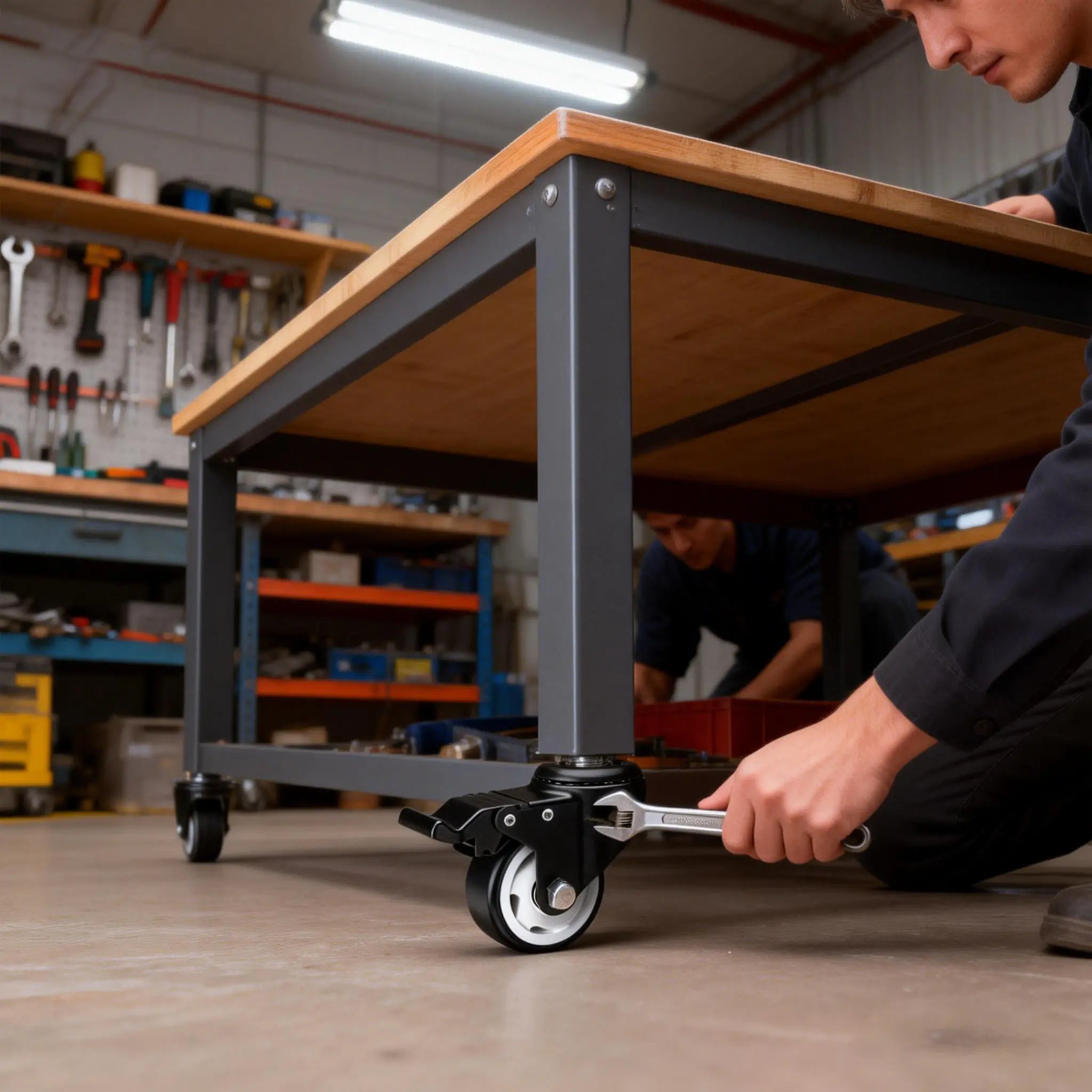
Best Stem Casters to Buy This Black Friday: A Complete 2025 Guide
Plate Casters vs Other Caster Wheels: Which Is Best for Your Equipment?